Nate Willems/FSJournalism
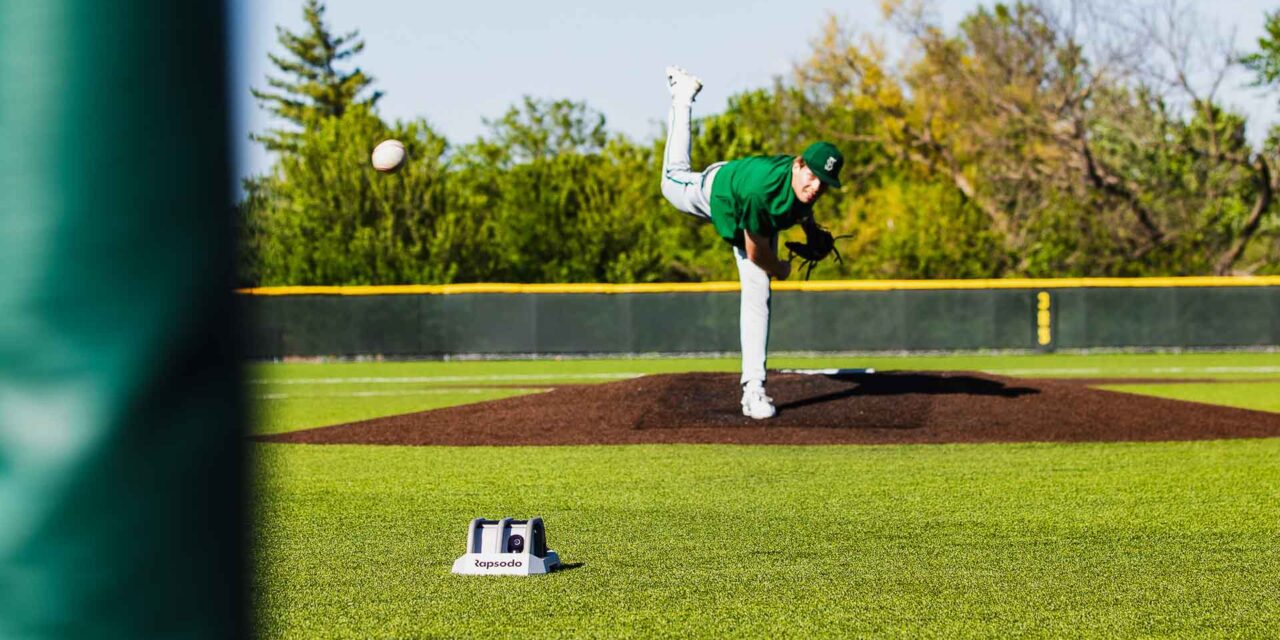
Free State’s Ryan Vigna throws a pitch from the mound while a Rapsodo device, on the ground in front of him, tracks various analytics data on the mechanics, speed and angle of his throw. This device is one of the multiple technology purchases made by the local high school baseball teams, thanks to fundraising efforts by the players and parents.
Baseball is a game of numbers.
That description held true long before the work of Bill James helped push forward the analytics-based approach to the game known as sabermetrics, commonly referred to as “Moneyball” like the 2011 film of the same name that dramatized this numbers revolution and its impact on Major League Baseball. The sabermetrics ushered in a new era, one which covers only the last few decades of a centuries old sport.
America’s pastime has seen an effort to quantify every last aspect of the game, which ending up creating a top-down effect that has changed not only how MLB teams operate, but how baseball teams operate at all tiers of the sport, all the way down to Little League. Whether its travel ball teams or high school baseball teams, these squads have needed to adapt to what’s become an expensive arms race, aimed at continually improving the process of developing young talent and elevating the level of competition.
For local high schools, that means teams have now started to approach the game with focus on providing varsity athletes with the same types of resources and training seen at the higher levels of baseball.
The reason is simple: Better technologies yield better numbers to help quantify the game.
Less simple is the fact that nearly all of those new tools involve another type of numbers game, one which is evaluated not on a stats sheet but instead on receipts and accounting spreadsheets.
Mac Moore/Lawrence Sports
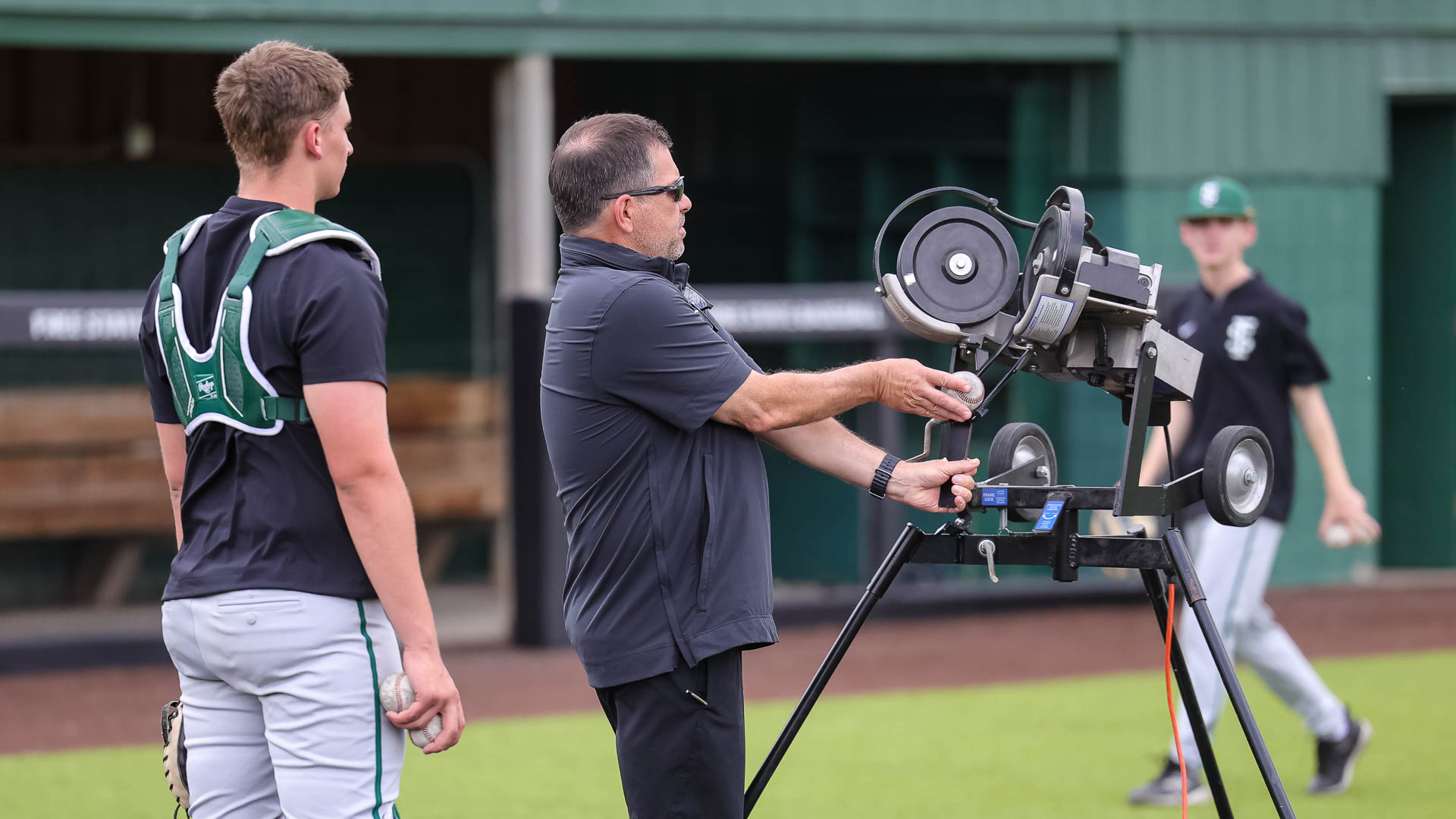
Free State baseball head coach Mike Hill places a ball into a fielding machine that simulates a pop fly for players to catch during practice. While this machine, and similar pitching machines, have long been used by local high school teams, the Firebirds have added in recent years other newer technologies that they use to help prepare the team for game days.
Over the last five years, family spending on youth sports has risen over 46%, according to a Project Play survey. Looking at youth baseball specifically, the average family spent $660 in 2019, however, that number jumped to $1,113 in 2024. One of the main reasons behind this massive rise, technology.
As technology continues to evolve the sport of baseball, tools once used primarily at the professional and collegiate level are becoming more common in high school programs. Devices such as Rapsodo and Blast Motion can aid coaching and player development, but the high-tech comes at a high price.
In Lawrence, both Free State and Lawrence High School have taken part in this technological evolution, incorporating advanced analytic tools into their programs.
“We’ve always been able to tell a kid, ‘Your fastball runs in, your slider runs away,’” Free State head coach Mike Hill said. “Now we have the data to actually show the player — 12 inches this way, seven inches that way.”
Hill has seen the role of data grow during his 35 years of coaching and is able to use the modern technology when reinforcing lessons coaches have long tried to teach.
“We can now use data to support the deductions that we have always been giving these kids,” Hill said.
Recently at Free State, the program purchased three new Rapsodo units, a ball-tracking device that tracks pitch movement and spin rate, as well as Blast Motion sensors for each player, which attach to the knob of a bat and measure swing metrics like bat speed and attack angle.
Hill said each Rapsodo cost the team $7,000 to $8,000 with roughly another $5,000 for equipping each player with Blast Motion sensors. Close to $30,000, this doesn’t include the annual $1,000 to $1,500 in subscription fees that comes with Rapsodo and Blast Motion technology.

Mac Moore/Lawrence Sports
Pictured is the bat of a Free State baseball player with a Blast Motion sensor attached to the end. The Firebirds used the sensor to track data on the physics of the players’ swings during batting practice.
In regard to where the funding comes from, Hill said, “The school’s not going to provide it.”
Instead, programs often rely on fundraising and parent support to cover many of their expenses. Free State baseball parent Diane Vigna, son of Ryan Vigna, a senior first baseman for the team, said the district’s athletic budget falls short of even baseball’s most basic needs.
Vigna, who had another son play varsity baseball for all three years, graduating in 2023, said, “The budget provided by the district doesn’t even pay for the baseballs that we go through in a season.”
Heavy Hitters, the program’s biggest fundraising event, is an opportunity for each player to get sponsored with all of the money raised going directly to the baseball fund. In the event, each player gets three pitches and whatever pitch goes the farthest in feet, that’s what the sponsor pays. For instance, if a player hits a ball 300 feet, they get $300 from their sponsor. Sponsors could also decide to pay a flat fee instead.
While fundraising events such as Heavy Hitters help cover program costs, the financial burdens of baseball often extend beyond the high school season, including summer and travel ball leagues.
“They’re two separate beasts completely,” Vigna said regarding the additional costs.
Some of those additional costs could be for travel, hotels, tournament dues, coaches pay, and equipment, adding roughly another $1,000 to $3,000, depending on where you play.
Mac Moore/Lawrence Sports
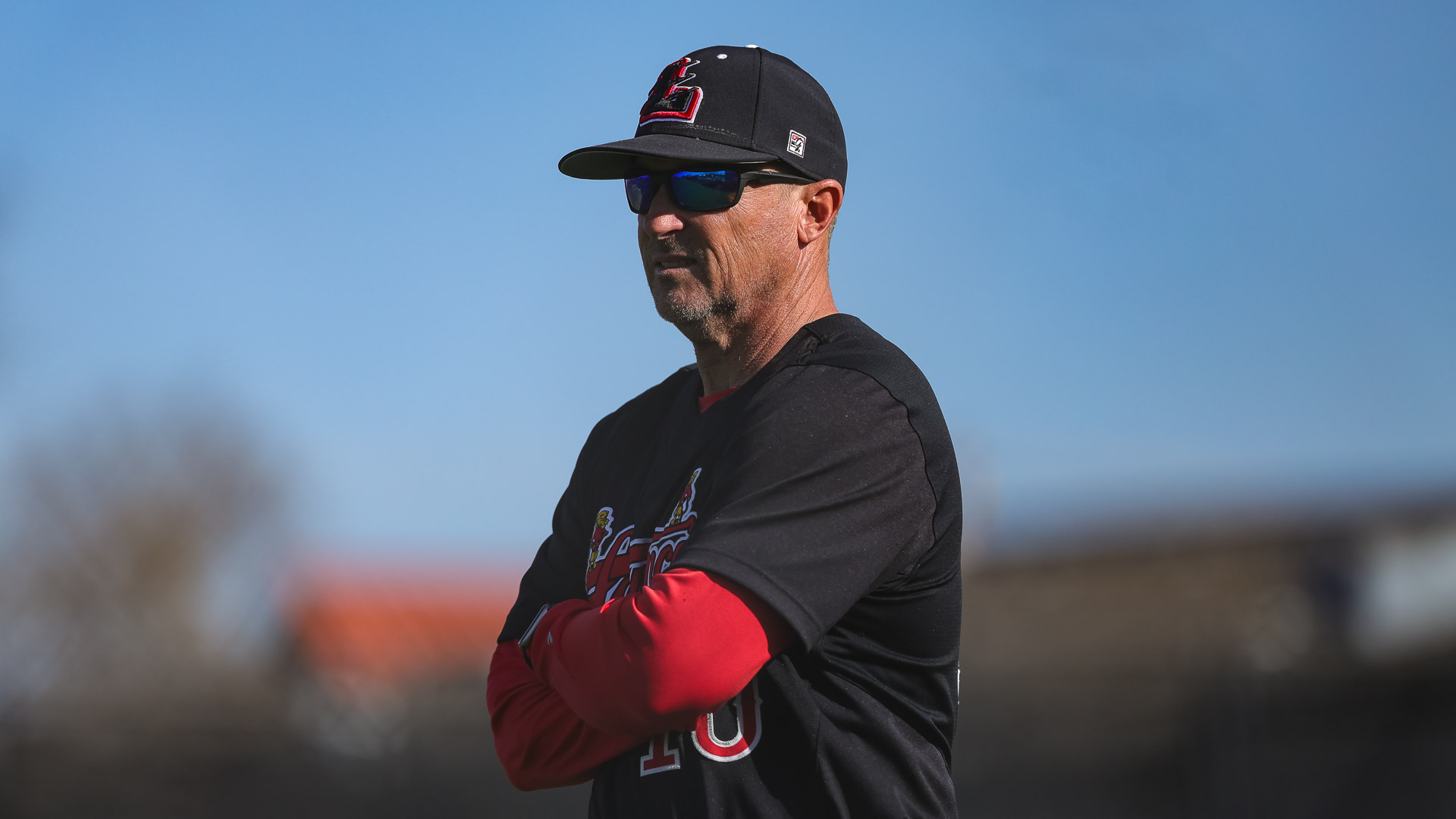
Lawrence High baseball head coach Adam Green looks out over the action during a baseball game on March 19 at Lawrence High School.
Over at Lawrence High School, the baseball program has also adopted modern baseball analytics. The program uses TrackMan, a radar-based system that tracks pitch movement, ball flight and other advanced performance metrics.
Hill pointed out that his team cannot always take full advantage of their tech devices, due to the limited time coaches have with players during the high school season. While Free State regularly uses the Blast Motion sensors, the Rapsodo device is often utilized in the offseason and during practices at the start of the season before generally getting left on the shelf for most of the spring campaign.
Lawrence High head coach Adam Green pointed out similar obstacles for his team in taking advantage of the similar technology that the Lions have at their disposal.
“We have a very limited window,” Green said. “To sit down and put a bunch of stats in front of them that they don’t really know what it’s talking about, we just choose to use our time a little differently than that.
Green added that the presence of advanced tech has not changed his ideologies on coaching, and he uses it sparingly.
“The video I think is good,” Green said. “The numbers can be a little bit deceiving.”
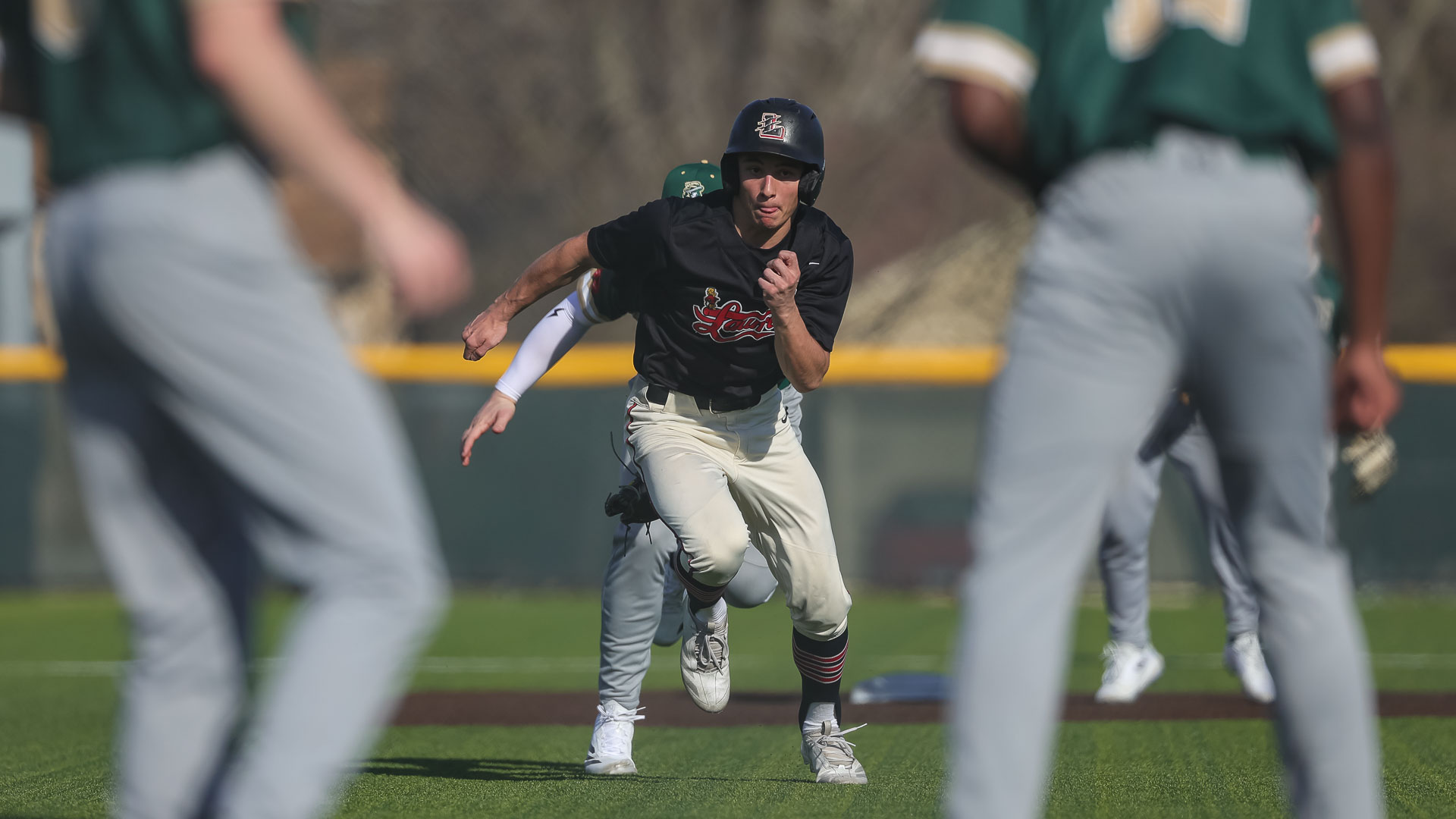
Mac Moore/Lawrence Sports
Lawrence High’s Turner Juelsgaard attempts to evade a tag during a baseball game on March 19 at Lawrence High School.
While Green and Hill each have slightly different perspectives on how technology fits into their coaching approaches, they both share the idea that baseball teams have to figure out when to trust the numbers.
For Free State, the reigning 6A state champion, sometimes it is just about whether the Firebirds believe the man-made numbers put in front of them rather than the cold-hard data of a box score.
When the Kansas Association of Baseball Coaches released their weekly high school rankings back on April 15, Free State dropped No. 4 in 6A. The Firebirds had previously held the top spot before an unexpected 5-4 loss against Sunflower League foe Olathe North.
But over the course of the next few weeks, Free State rattled off victories over a series of top teams in the state. The Firebirds started with a 9-2 road win over then No. 2 Mill Valley, followed by 7-4 road win the next week over another league foe in Olathe East, which was also the No. 1 team and undefeated at the time.
Free State continued with a 1-0 win over Olathe West, which at the time was the last team to be undefeated in Sunflower League play.
Although the victory provided the Firebirds a path to win at least a share of the Sunflower League title if they were to win out, they never elevated in the KABC rankings over either Olathe East or Mill Valley.
On the same day that the May 6th rankings were released, which left Free State in the five spot, the Firebirds added to their resume of beating three straight 6A powerhouses in just three weeks by taking down the No. 1 team in 5A as well. Free State earned a 6-2 win over St. Thomas Aquinas, the two-time reigning 5A state champion.
But after reaching that high, Free State would not be able to keep the hot streak running long enough to see if the team would jump in the polls the following week. The Firebirds suffered a let down the next night when they lost 5-0 against Olathe Northwest, which effectively handed the Sunflower League crown over to Olathe West.
Hill and his players will likely spend more time lamenting their own missed opportunity to win a share of the league crown than worrying about the far less important rankings. But interestingly, the Sunflower League champ seems to have been destined to somehow still be only the league’s third-highest ranked squad in 6A. Olathe West took over Free State’s spot at No. 5, while Mill Valley held onto No. 2 and Olathe East slid from No. 3 to No. 4.
But Free State can throw all those numbers out the window as the team turns its attention to the postseason. The Firebirds earned the No. 2 spot in the 6A West regional, behind only a Maize team that sits at No. 4 for 6A in those most recent KABC rankings. The Firebirds will start their title defense next week when 6A regionals begin on Monday.
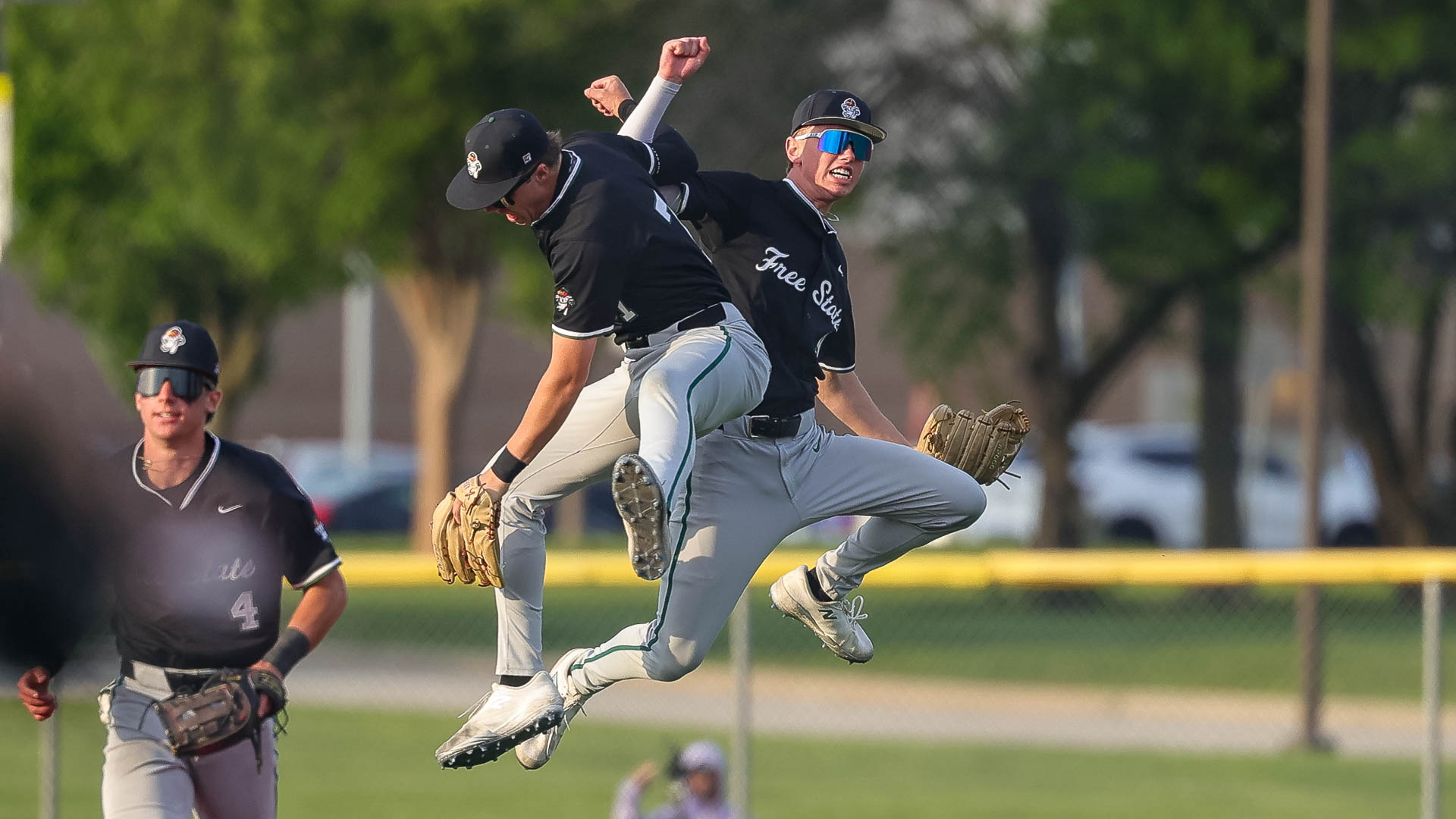
Mac Moore/Lawrence Sports
Free State players Nathan Young and Ryan Vigna jump into the air and interlock their right biceps during a postgame celebration after the Firebirds earned a 1-0 victory over Olathe West on April 30 at College Boulevard Activity Center in Olathe.
For Green’s squad, Lawrence High is hoping to throw out most of the numbers from its current 7-17 record. Instead, the team wants to enter the postseason delivering a little closer to what the Lions were able to produce over the last four games heading into Thursday night’s regular season finale at home against Washburn Rural.
Lawrence High went 2-2 over that recent stretch, earning a 7-1 win over Shawnee Mission East and then earning an 11-2 victory over Blue Valley North in the middle of two reasonably close losses against some of those ranked league foes. The Lions lost 5-3 against Mill Valley last week and 6-3 against Free State in the baseball edition of the City Showdown on May 11.
Both Lawrence High and Free State will continue to see how this game of numbers plays out on the diamond. Whatever role these expensive technologies play in developing a real contender, most of that work is put in early on in the year, often during the offseason and at the start of the spring sports calendar.
Heading into late May, the only numbers that matter to them is what the final score says during however many games they have left to play this year.
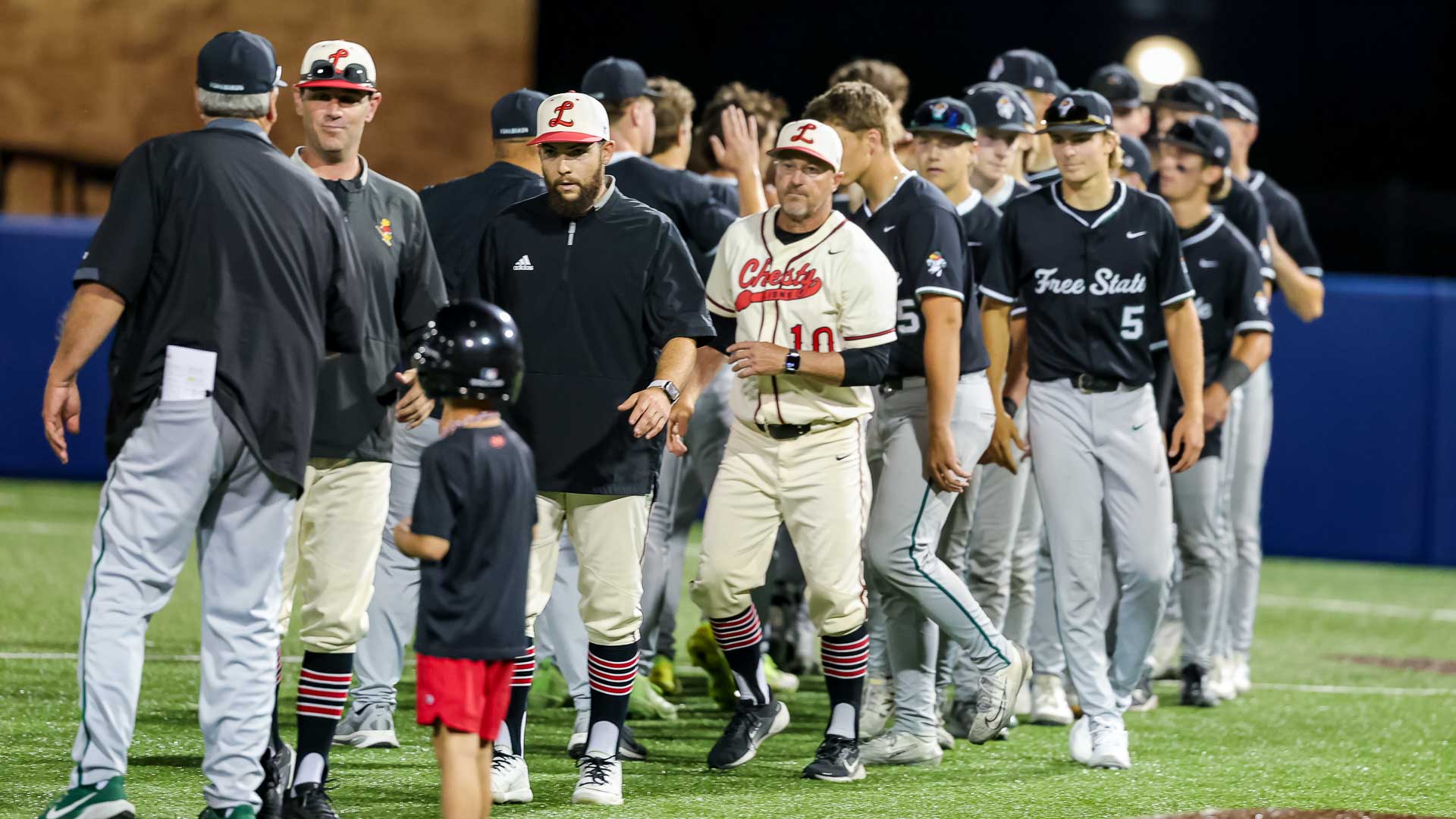
Mac Moore/Lawrence Sports
Members of the Lawrence High and Free State baseball teams shake hands following this year’s baseball edition of the City Showdown on May 11 at Hoglund Ballpark on the University of Kansas campus.